
AI Leadership: The 18-Month Window That Determines Who Survives
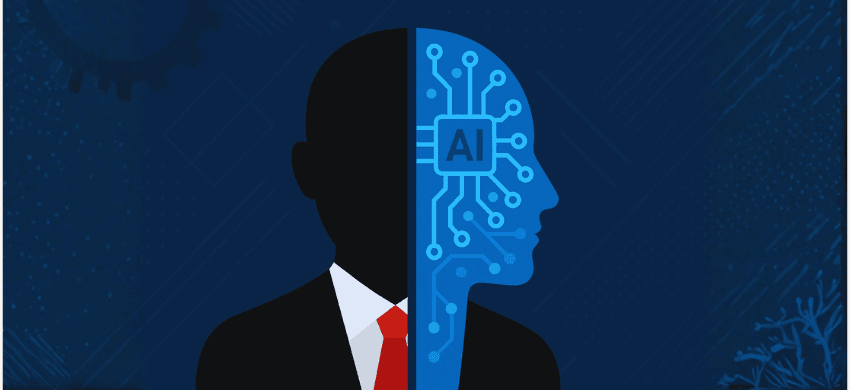
Two weeks ago, a Fortune 500 board did something unprecedented. They fired a CEO with stellar performance for one reason: a lack of AI vision. Revenue was up 20%. Profits at record highs. Employee satisfaction is strong. But when asked about AI strategy, he talked about “evaluating options” and “being thoughtful.” The board replaced him with a 35-year-old who’d built an AI-first company. The message was crystal clear: Traditional leadership is dead.
This isn’t an isolated incident. I’m tracking seventeen similar CEO replacements in the last quarter alone. Boards are realizing that leaders who don’t understand AI can’t lead AI-enabled organizations. The executives getting hired all share one characteristic: They don’t just use AI tools. They think in AI systems. They don’t manage AI projects. They lead AI transformations. They embody AI leadership, not just traditional leadership with AI sprinkled on top.
Here’s the uncomfortable truth every executive needs to confront: You have approximately eighteen months to transform from traditional leader to AI leader. Not to learn some AI tools. Not to hire some AI talent. To fundamentally transform how you think about leadership, strategy, and value creation. After eighteen months, the gap between AI leaders and traditional leaders becomes unbridgeable. Those on the wrong side become unemployable at senior levels.
The transformation I’m describing isn’t about technology skills. It’s about leadership evolution. AI leaders see organisations differently. They design systems instead of managing people. They orchestrate intelligence instead of making decisions. They multiply capability instead of adding resources. This guide shows exactly what AI leadership means, how to develop it before it’s too late, and why most executives are approaching it completely wrong.
By the end, you’ll understand why becoming an AI leader isn’t optional and have a clear path to transformation. But more importantly, you’ll understand why attempting this transformation alone virtually guarantees failure.
The Leadership Extinction Event Nobody’s Discussing
Why Your Replacement Is Already Being Trained
While you’re in budget meetings discussing incremental improvements, thousands of AI-native leaders are building companies that make your entire industry obsolete. They didn’t attend business school. They don’t think in quarterly earnings. They see every business as an AI system waiting to be optimised. And private equity is backing them to buy and transform companies just like yours.
The pattern is consistent across industries. A traditional retailer with 1,000 stores gets disrupted by an AI-first competitor with 10 employees. An established service company with 500 consultants loses clients to an AI-enabled boutique with 20. Legacy manufacturer with decades of experience gets outmaneuvered by a startup using AI to predict and prevent every failure mode.
These AI-native leaders aren’t winning because they’re smarter. They’re winning because they think differently. Where you see employees, they see systems. Where you see processes, they see algorithms. Where you see data, they see intelligence. They’re playing a different game with different rules, and traditional leadership training didn’t prepare you for it.
The timeline is accelerating. Five years ago, AI leaders were curiosities. Three years ago, they were experiments. Today, they’re getting CEO jobs. Eighteen months from now, they’ll be the only ones getting CEO jobs. The window for transformation is closing, and most executives don’t even know they need to transform.
Your replacement isn’t just learning AI. They’re thinking in AI. Understanding the difference is critical…
The Board Conversation That Ends Careers
“Tell us about your AI strategy.” Five years ago, this question was optional. Today, it’s career-defining. But here’s what boards are really asking: “Are you an AI leader or a traditional leader trying to fake it?” Your answer reveals everything about your future viability as an executive.
Traditional leaders talk about AI projects, pilot programs, and evaluation phases. They discuss vendors, tools, and implementations. They present AI as an addition to strategy. Boards hear this and think: This person doesn’t get it. They’re treating AI like IT when it’s actually reshaping everything about business. They’re managing AI when they should be leading through AI.
AI leaders talk differently. They discuss AI-enabled business models, intelligence-driven operations, and systematic capability multiplication. They present AI as the foundation of strategy, not an addition to it. They don’t have an AI strategy. Their entire strategy assumes AI. The difference is subtle linguistically but massive strategically.
The career implications are brutal. Traditional leaders are getting “transitioned out” at record rates, not for performance failures but for vision gaps. Boards are calculating that keeping a non-AI leader for two more years costs more in missed opportunity than recruiting an AI leader today. The severance packages are generous, but the message is clear: Evolve or exit.
I recently witnessed this conversation destroy a stellar thirty-year career in thirty minutes. The CEO presented impressive results and thoughtful planning. But when pressed on AI leadership, he revealed traditional thinking. The board’s body language shifted immediately. Six weeks later, he was gone. His replacement? A 38-year-old who’d never run a public company but thinks in AI systems.
The board conversation reveals the gap, but the daily reality is where traditional leadership truly fails…
Why Traditional Management Skills Became Liabilities
The skills that made you successful are now making you obsolete. Managing people? AI systems need design, not management. Building consensus? AI provides data-driven answers. Years of experience? AI processes centuries of experience in seconds. Emotional intelligence? Still valuable, but secondary to system intelligence.
Consider decision-making. Traditional leaders gather input, analyze options, and make judgment calls based on experience. AI leaders design decision systems that continuously process all available data, identify patterns humans can’t see, and recommend actions with probability scores. The AI leader’s job isn’t making decisions but designing decision systems. Completely different skill.
Or take team building. Traditional leaders hire, train, and motivate humans. AI leaders orchestrate hybrid teams of humans and AI agents. They don’t ask “Who should we hire?” but “Should this be human or AI?” They don’t manage performance but design performance systems. They don’t delegate tasks but architect capability.
The liability compounds because traditional leaders don’t even see what they’re missing. They think they’re adapting by using AI tools. But using ChatGPT for email doesn’t make you an AI leader any more than using Excel makes you a data scientist. The transformation required is fundamental, not cosmetic.
Traditional skills became liabilities, but the solution isn’t what most executives think…
What AI Leadership Actually Means (Hint: Not What Vendors Tell You)
The Difference Between Using AI and Thinking AI
Every executive uses AI now. ChatGPT for writing. Claude for analysis. Copilot for coding. This tool usage creates false confidence. “I’m using AI daily, therefore I’m an AI leader.” This misconception is career-fatal. Using AI tools makes you an AI user. Thinking in AI systems makes you an AI leader. The difference determines your future.
AI users approach problems traditionally, then apply AI tools. They think: “How can AI help me write this email faster?” AI leaders approach problems systemically. They think: “How can I design an AI system that eliminates the need for this email category entirely?” One saves time. The other transforms operations.
AI users see AI as a capability enhancement. Make humans more productive. Automate repetitive tasks. Accelerate existing processes. AI leaders see AI as a capability multiplier. Don’t make salespeople better, create AI agents that sell. Don’t automate support, design AI that prevents support needs. Don’t accelerate analysis, build AI that continuously analyzes everything.
The thinking difference manifests everywhere. AI users ask, “Which AI tool should we buy?” AI leaders ask “What intelligence architecture should we build?” AI users measure productivity improvements. AI leaders measure capability transformations. AI users manage AI projects. AI leaders architect AI ecosystems.
One founder articulated this perfectly: “I stopped thinking about AI as tools we use and started thinking about AI as the nervous system of our organization. Every decision, every process, every interaction flows through AI. We don’t have an AI strategy. We have a strategy that assumes AI in everything.”
Thinking AI is powerful, but it requires capabilities that traditional executive education doesn’t provide…
The Five Capabilities That Define AI Leaders
After studying hundreds of AI leaders versus traditional leaders attempting AI adoption, five capabilities consistently separate them. These aren’t technical skills but leadership capabilities that traditional executive development ignores completely.
First: Systems Architecture Thinking. AI leaders see organizations as systems to be designed, not structures to be managed. They think in workflows, data flows, and intelligence loops. They ask “How should information flow?” not “Who should report to whom?” They design organizations like engineers, not administrators.
Second: Probabilistic Decision Making. Traditional leaders seek certainty. AI leaders navigate probability. They’re comfortable with “70% confidence” recommendations. They understand that perfect information is impossible but good-enough information is abundant. They make more decisions faster with less certainty but better outcomes.
Third: Continuous Learning Velocity. AI capabilities double every six months. AI leaders learn at pace with technology. Not through courses but through constant experimentation. They run more experiments monthly than traditional leaders run yearly. Each experiment teaches something. The learning compounds exponentially.
Fourth: Hybrid Team Orchestration. AI leaders don’t manage humans or AI separately. They orchestrate hybrid teams where humans and AI amplify each other. They understand which tasks suit human creativity and which suit AI consistency. They design interfaces between human judgment and AI processing.
Fifth: Exponential Thinking. Traditional leaders think linearly: 10% growth yearly. AI leaders think exponentially: 10x growth possible. They design for a scale that seems impossible. They are architects for capabilities that don’t exist yet. They plan for discontinuous jumps, not incremental progress.
These capabilities are essential, but developing them requires a transformation process most executives aren’t prepared for…
The Transformation Path No One Talks About
Why AI Courses for Executives Make Things Worse
The market is flooded with “AI for executives” and “AI for business leaders” courses promising transformation. They deliver confusion. Here’s why: They teach AI as an addition to traditional leadership rather than a replacement for it. You learn to be a traditional leader with AI knowledge, not an AI leader. The difference is fatal.
These courses spend 80% of the time on what AI is and 20% on what to do with it. They explain machine learning, neural networks, and large language models. You leave understanding AI technology, but not AI leadership. You can discuss AI intelligently but can’t lead through AI effectively. Knowledge without capability is dangerous because it creates false confidence.
The deeper problem: These courses are taught by people who’ve never led AI transformations. Academics who study AI but haven’t built AI organizations. Consultants who advise on AI but haven’t operated with AI. Vendors who sell AI but haven’t transformed with AI. They teach theory when you need practice.
But the fatal flaw is the format itself. AI leadership can’t be learned in a course. It must be developed through transformation. You don’t become an AI leader by learning about AI leadership. You become one by leading with AI, failing with AI, iterating with AI, and ultimately succeeding with AI. Courses provide information. Transformation requires experimentation.
One executive described the problem perfectly: “I completed three AI executive courses. I could pass any test on AI concepts. But when faced with actual AI leadership decisions, I was guessing. The courses taught me AI vocabulary, not AI capability.”
Courses fail because they’re episodic. Real transformation requires something different…
The Identity Crisis Every Leader Faces
The hardest part of becoming an AI leader isn’t learning new skills. It’s releasing old identity. You’ve spent decades becoming excellent at traditional leadership. That excellence is now your prison. Letting go feels like professional death. But holding on guarantees professional extinction.
The identity crisis manifests predictably. “If AI makes decisions, what’s my value?” “If AI manages operations, what’s my role?” “If AI knows more than me, why am I the leader?” These questions paralyze executives because they challenge fundamental assumptions about leadership value. The answers require reimagining leadership entirely.
AI leaders resolve this crisis by redefining their value. They don’t make decisions; they design decision systems. They don’t manage operations; they architect capabilities. They don’t know the most; they orchestrate intelligence most effectively. Their value isn’t in doing but in designing. Not in knowing but in connecting. Not in managing but in multiplying.
The psychological journey is brutal. One day you’re the expert everyone consults. The next day, AI provides better answers. One day you’re managing hundreds of people. The next day, AI systems handle everything those people did. One day your experience is invaluable. The next day, AI has processed more experience than you could accumulate in a thousand lifetimes.
But here’s what successful transformations reveal: The journey through identity crisis to AI leadership is liberating. You stop grinding through decisions and start designing decision systems. You stop managing complexity and start orchestrating capability. You stop being the bottleneck and become the multiplier. The new identity is more powerful than the old.
Identity crisis is necessary but navigating it alone is nearly impossible…
The 90-Day Metamorphosis That Actually Works
Traditional leadership to AI leadership transformation follows a predictable 90-day path when properly supported. Not random experimentation but structured evolution. Not a comfortable adjustment but a deliberate metamorphosis. The executives who successfully transform follow this pattern.
Days 1-30: Unlearning traditional leadership. Stop making every decision personally. Start designing decision frameworks. Stop managing people directly. Start architecting systems. Stop solving problems individually. Start building problem-solving capabilities. This phase feels like professional death because you’re dismantling everything that made you successful.
Days 31-60: Experimenting with AI leadership. Design your first AI system that replaces something you used to do. Orchestrate your first hybrid team of humans and AI. Make your first probabilistic decision based on AI recommendation. Each experiment builds new neural pathways while old ones atrophy. Confidence comes from small wins, not big transformations.
Days 61-90: Integrating AI leadership identity. You’re no longer trying to be an AI leader. You’re thinking like one naturally. AI isn’t something you consider; it’s assumed in everything. Systems thinking isn’t effortful; it’s default. Exponential possibilities aren’t fantasy; they’re planning assumptions. The transformation is complete when AI leadership feels more natural than traditional leadership.
The metamorphosis only works with three elements: structured framework, continuous support, and peer validation. Without a framework, you’re randomly experimenting. Without support, you abandon when it gets hard. Without validation, you don’t know if you’re transforming or just changing.
The 90-day transformation is possible, but success requires something most executives never consider…
The Peer Acceleration Phenomenon
How to Learn Artificial Intelligence From Leaders Who’ve Already Transformed
The fastest way to become an AI leader isn’t studying AI. It’s learning from leaders who’ve already transformed. Not their knowledge but their thinking patterns. Not their answers but their approaches. Not their success stories but their transformation journey. This peer learning accelerates transformation 5x faster than solo attempts.
When twelve executives transform together, pattern recognition accelerates everything. Eight struggle with the same identity crisis, revealing it’s normal, not personal. Six succeed with similar approaches, validating the path. Four fail with specific methods, preventing wasted effort. The collective intelligence compresses years of learning into months.
But the real acceleration comes from thinking exposure. When you see how AI leaders approach problems, your own thinking evolves. When you watch them design systems instead of managing tasks, you start thinking systematically. When you observe them making probabilistic decisions comfortably, you become comfortable with uncertainty. Proximity to AI thinking creates AI thinking.
The psychological safety of peer transformation enables vulnerability impossible elsewhere. You can admit you don’t understand something without appearing weak to subordinates. You can share transformation struggles without risking board confidence. You can experiment and fail without career consequences. This safety accelerates learning exponentially.
Peer learning accelerates transformation, but the real breakthrough comes from collective intelligence…
The Collective Intelligence That Makes Individual Brilliance Obsolete
Traditional leadership celebrates individual brilliance. The visionary CEO. The brilliant strategist. The charismatic leader. AI leadership makes individual brilliance obsolete through collective intelligence. Twelve AI leaders thinking together exceed any individual capability by orders of magnitude.
The multiplication effect is mathematical. Each leader experiments with different AI applications. Twelve experiments generate twelve learnings shared with all. Each learning prevents eleven failures and enables eleven adaptations. The collective learns 144x faster than individuals. This isn’t collaboration. It’s intelligence multiplication.
But collective intelligence transcends shared learning. When AI leaders think together, emergent insights appear that no individual would generate. Patterns become visible across companies. Opportunities emerge from combined perspectives. Solutions develop from connected experiences. The whole genuinely exceeds the sum.
The competitive implications are profound. Organizations with isolated leaders, no matter how brilliant, can’t compete with those whose leaders tap collective intelligence. The isolated leader makes one good decision. The connected leader makes twelve good decisions informed by collective experience. The gap compounds daily.
One AI leader described it: “I used to pride myself on being the smartest person in the room. Now I realize that’s irrelevant. I’m part of a collective intelligence that’s smarter than any room. My value isn’t individual brilliance but connecting our organization to collective intelligence.”
Collective intelligence is powerful, but accessing it requires the right environment…
Your 18-Month Survival Plan
The clock started when you began reading this. Eighteen months from now, the divide between AI leaders and traditional leaders will be unbridgeable. Those who transform will lead the next generation of organizations. Those who don’t will be managing declining operations or retired. The choice isn’t whether to transform but how quickly.
Months 1-6: Foundation building. Stop managing, start designing. Stop deciding, start architecting. Begin thinking in systems, not tasks. Design your first AI systems. Make your first probabilistic decisions. Start measuring capability multiplication, not productivity improvement. This phase is uncomfortable but essential.
Months 7-12: Acceleration phase. Your AI systems are generating value. Your thinking naturally defaults to AI-first. Your organization sees you as an AI leader, not a traditional leader experimenting with AI. You’re orchestrating hybrid teams naturally. You’re making exponential bets confidently. The transformation is becoming permanent.
Months 13-18: Leadership phase. You’re not becoming an AI leader; you are one. You’re helping other executives transform. You’re designing AI strategies that seem impossible to traditional thinkers. You’re building organizations that operate at 10x efficiency. You’re attracting AI-native talent that wouldn’t work for traditional leaders.
But here’s what determines success: The executives who transform successfully don’t do it alone. They join communities of leaders transforming together. They learn from those ahead of them. They experiment with peer support. They tap collective intelligence. The lone wolf approach to AI leadership transformation has a 90% failure rate. The peer-supported approach has an 80% success rate.
The plan is clear, but execution requires commitment most executives aren’t prepared to make…
The Decision That Defines Your Future
Right now, you face the most important decision of your career. Continue as a traditional leader, using AI tools but thinking traditionally, and watch your relevance evaporate over eighteen months. Or commit to fundamental transformation into an AI leader, thinking in systems and exponential possibilities, and position yourself for the next phase of leadership.
The transformation isn’t optional if you want to remain in senior leadership. Boards are already preferring AI leaders. Private equity is backing them exclusively. Employees want to work for them. Customers expect them. The market has decided: AI leadership is the future. Traditional leadership is the past.
But transformation isn’t just about survival. It’s about possibility. AI leaders operate at different scales. They achieve things traditional leaders consider impossible. They build organizations that adapt continuously. They create value multipliers, not incremental improvements. They’re playing a different game with different rules and different outcomes.
The Executive AI Mastermind provides the environment where this transformation happens. Not through courses about artificial intelligence for business leaders but through actual transformation alongside other executives becoming AI leaders. Monthly sessions that reshape thinking. Peer support through an identity crisis. Collective intelligence that accelerates learning. Real transformation, not theoretical education.
The executives joining aren’t looking for AI courses for executives. They’re committing to fundamental transformation. They understand that AI leadership isn’t something you learn but something you become. They’re ready to release traditional identity and embrace exponential possibility.
Join executives transforming into AI leaders before the window closes permanently.
YOUR JOURNEY STARTS TODAY
Isn’t it time you had an advisory team that truly elevates you!

I’m an executive advisor and keynote speaker—but before all that, I was a tech CEO who learned leadership the hard way. For 16+ years I built companies from scratch, scaled teams across three continents, and navigated the collision of startup chaos and enterprise expectations.