
What Makes a Good Leader? The Counter-Intuitive Truth 7-Figure CEOs Know
By Andreas Petterson, Former CEO (Canon Company) & Founder of Leaders ADAPT
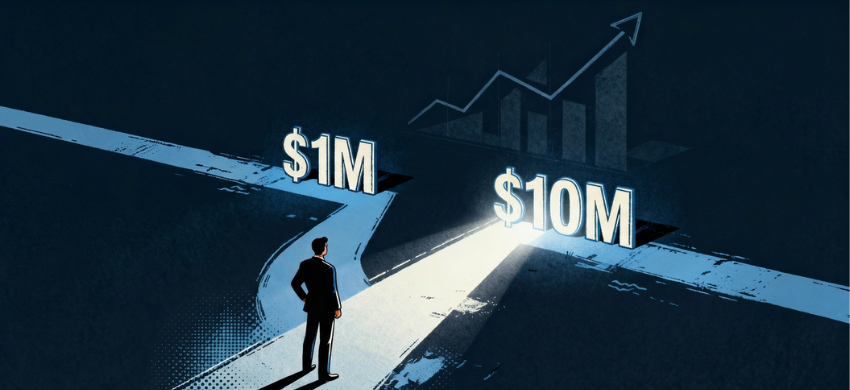
After working with over 200 CEOs in the trenches of scaling their companies, I’ve noticed something disturbing: almost everything taught about leadership in business schools is backwards. The qualities that get you to $1M will literally destroy your company at $10M.
Before diving into what truly makes a good leader, understanding your natural leadership tendencies provides essential context. Most leaders operate from unconscious patterns that either accelerate or sabotage their growth. Discovering your leadership type takes just 5 minutes and reveals which principles below will resonate most with your situation.
The $5 Million Leadership Paradox Nobody Talks About
Here’s what nobody tells you about leadership: What makes a good leader at $1M in revenue will destroy your company at $10M.
I learned this the hard way, scaling a tech company from zero to 150 employees as Canon’s youngest standalone CEO. The leadership qualities that got you to seven figures? They’re often the exact opposite of what you need for eight.
Last month, I had coffee with a CEO stuck at $8M for three years. Smart guy, MBA from Wharton, doing everything “right” according to the books. Open door policy, consensus building, servant leadership, the works. His company was dying.
Why? Because he was still leading like it was a 10-person startup.
In my mastermind groups, I see this pattern constantly. The CEOs who break through? They abandon nearly everything they learned about “good leadership.”
“Andreas challenged everything I thought I knew about leadership. His contrarian approach helped me break through our $8M plateau to reach $22M in 18 months.” – Sarah Chen, CEO of TechScale Solutions
In this comprehensive guide, I’ll reveal:
- The 7 counter-intuitive qualities that separate good leaders from great ones
- Why traditional leadership advice fails at scale
- The exact leadership transformation required at each revenue milestone
- My proven ADAPT framework for leadership evolution
- Real examples from building and exiting a 150-person company
But first, let me share the moment that changed everything…
The Day I Almost Destroyed My Company with “Good Leadership”
It was my fourth year as CEO. We’d just crossed $15M in revenue. I was doing everything the leadership books told me:
- Open door policy ✓
- Hands-on coaching ✓
- Consensus-driven decisions ✓
- Leading by example ✓
Revenue was growing. And we were dying.
My calendar was booked 14 hours a day. Every decision came through me. My “good leadership” had become the bottleneck threatening everything we’d built.
One Friday at 11 PM, still at the office, I realized I’d become the single point of failure. My team literally couldn’t function without me. That’s not leadership. That’s organizational dependency.
The truth? What makes a good leader isn’t universal. It’s contextual. And context changes with scale.
This aligns with what I later discovered about the CEO vs Manager Mindset differences that most leaders miss. The transition requires abandoning everything that made you successful initially.
Most leaders don’t realize they’re using the wrong style for their company’s stage. If you’re curious where you fall on this spectrum, understanding your leadership style helps identify whether your approach matches your current reality.
Part 1: The Traditional Definition (And Why It’s Killing Your Growth)
What Most Experts Say Makes a Good Leader
According to CCL, Harvard Business Review, and countless academic studies, good leaders possess:
- Integrity – Being honest and ethical
- Communication – Clear and consistent messaging
- Empathy – Understanding others’ perspectives
- Vision – Seeing the big picture
- Decisiveness – Making timely decisions
- Accountability – Taking responsibility
- Adaptability – Adjusting to change
Sounds right, doesn’t it?
Here’s the problem: These qualities are table stakes. Every mediocre manager has them. They won’t differentiate you. They won’t scale your business. And they definitely won’t get you through the 7-figure ceiling.
The Academic vs. Reality Gap
Universities like Northwestern and Cornell dominate the search results for leadership qualities. But here’s what they miss:
Academic Leadership Theory:
- Based on research studies
- Focused on large corporations
- Assumes stable environments
- Emphasizes consensus
7-Figure CEO Reality:
- Based on survival
- Focused on resource constraints
- Operates in chaos
- Demands speed
I’ve hired MBAs from top programs who couldn’t lead a 10-person team effectively. Meanwhile, I’ve seen college dropouts build $50M companies. The difference? They learned leadership from reality, not theory.
In fact, most CEOs I work with spend their first year unlearning what they thought they knew about leadership.
Part 2: The 7 Counter-Intuitive Qualities of Exceptional Leaders
After analyzing hundreds of successful CEO transitions through Leaders ADAPT, here are the qualities that actually matter:
1. Strategic Selfishness (Not Servant Leadership)
The Myth: Good leaders serve others first.
The Reality: At scale, you must ruthlessly protect your energy.
I tracked this with dozens of CEOs last year. Those who successfully scaled past $10M? They’d all implemented strict time boundaries. The ones stuck below $5M? Still trying to be “accessible to everyone.”
When I hit 100 employees, I stopped the open-door policy. I cancelled 80% of my meetings. I became “selfish” with my time.
Result? Revenue grew 40% in six months.
I developed what I call the Energy Allocation Matrix after years of trial and error:
- 20% – Direct team leadership
- 30% – Strategic planning
- 30% – External relationships
- 20% – Personal development
One client implemented this and told me six months later: “I work 20 fewer hours per week and we’re growing faster than ever.”
This framework revolutionized how I structured my days, similar to what I teach in The CEO Decision System: The 70% Rule.
2. Productive Paranoia (Not Optimism)
The Myth: Good leaders are eternally optimistic.
The Reality: The best leaders are paranoid about what could go wrong.
Andy Grove called it “only the paranoid survive.” At Canon, I learned to ask:
- What could kill us in 6 months?
- Which assumption could be wrong?
- Where are we lying to ourselves?
I run “premortem” sessions with every CEO I coach. We imagine the company failed and work backwards. The optimists hate it. The successful ones love it.
Case Study: Six months before a major market shift, my paranoia about customer concentration led us to diversify. When the shift hit, we were one of the few companies in our space that grew.
Three competitors who were “optimistically focused on their core market”? They’re gone now.
This approach requires the Resilient CEO Mindset I’ve written about extensively.
3. Selective Transparency (Not Radical Honesty)
The Myth: Good leaders share everything.
The Reality: Strategic opacity protects your team.
I learned this from a painful mistake. Early on, I shared every challenge with my team, thinking transparency built trust. Instead, it built anxiety. People started updating their resumes every time we lost a deal.
Your team doesn’t need to know:
- Every funding concern
- Each customer complaint
- All strategic pivots considered
The Rule: Share the destination, not the turbulence.
One of my mastermind members put it perfectly: “My team needs a captain, not a weather reporter.”
4. Intellectual Brutality (Not Emotional Intelligence)
The Myth: Good leaders prioritize feelings.
The Reality: Kindness without truth is manipulation.
My Swedish directness was initially seen as harsh. But CEOs pay premium rates precisely because I’ll say what others won’t:
- “Your strategy is wishful thinking”
- “That hire will sink your company”
- “You’re the problem here”
Last week, a CEO thanked me for telling him his favorite product line was garbage. His team had been too nice to mention it was losing money for two years.
The Balance: Be brutally honest with ideas, compassionately honest with people. This is core to Radical Candor at Work.
5. Systematic Abandonment (Not Persistence)
The Myth: Good leaders never quit.
The Reality: Knowing what to abandon is more important than what to pursue.
Every quarter, I forced myself to kill:
- One project showing promise
- One comfortable routine
- One “sacred cow” belief
The Question: What would you stop doing if you were hired as your own replacement?
I’ve noticed the fastest-growing CEOs in my groups kill at least one major initiative every quarter. The struggling ones? They’re still working on projects from three years ago.
6. Contrarian Conviction (Not Consensus Building)
The Myth: Good leaders build consensus.
The Reality: If everyone agrees, you’re probably wrong.
My decision to position our company in a niche market went against every advisor’s recommendation. That contrarian bet led to our successful exit.
I see this pattern repeatedly: breakthrough strategies almost always face initial resistance from boards and advisors. If your strategy sounds reasonable to everyone, it’s probably not ambitious enough.
“The best advice Andreas gave me was to ignore my board’s ‘safe’ recommendations. That contrarian move tripled our valuation.” – Michael Torres, Founder of DataFlow Inc.
7. Calculated Neglect (Not Work-Life Balance)
The Myth: Good leaders model work-life balance.
The Reality: Seasonal imbalance drives breakthrough results.
During our scaling phase, I worked 80-hour weeks for six months straight. Then I took a month off completely.
Almost every successful exit I’ve witnessed involved the CEO going through periods of extreme imbalance. Not sustainable forever, but necessary for breakthrough moments.
The Pattern:
- Sprint seasons (70% capacity)
- Marathon seasons (50% capacity)
- Recovery seasons (20% capacity)
These seven qualities form an interconnected system. To understand which ones you most need to develop, assessing your current leadership skills provides a personalized roadmap rather than generic advice.
Part 3: The Revenue-Based Leadership Evolution Model
What makes a good leader changes dramatically at each revenue stage. I’ve codified this into a framework after experiencing each transition personally:
The Hard Truth About Leadership Transitions
Here’s what I’ve observed across hundreds of companies:
At $0-1M: About 9 out of 10 founders who can’t execute relentlessly fail before they start.
At $1-5M: Most CEOs who refuse to delegate start hitting walls around $3M.
At $5-10M: The companies that don’t build systems plateau hard, usually forever.
At $10-25M: Culture becomes everything. Ignore it and watch your best people leave.
At $25M+: If you’re not thinking strategically, someone else will eat your lunch.
$0-1M: The Hustler Leader
Primary Quality: Relentless execution
- Do everything yourself
- Sell constantly
- Move fast, break things
Fatal Flaw: Trying to delegate too early
The Mental Shift: You ARE the business at this stage. Embrace it.
$1-5M: The Player-Coach Leader
Primary Quality: Selective delegation
- Lead from the front
- Train while doing
- Build initial systems
Fatal Flaw: Holding onto favorite tasks
The Mental Shift: Your job is building capability, not just delivering results. This is where understanding How to Go From Director to VP becomes critical.
$5-10M: The Architect Leader
Primary Quality: System design
- Create scalable processes
- Build leadership team
- Step out of day-to-day
Fatal Flaw: Micromanaging implementation
The Mental Shift: You’re building a machine that runs without you.
I’ve seen too many CEOs stuck here because they can’t let go of the details. One told me last month: “I know every customer by name.” I replied: “That’s exactly your problem.”
$10-25M: The Cultural Leader
Primary Quality: Environmental design
- Shape culture intentionally
- Lead through leaders
- Focus on alignment
Fatal Flaw: Losing touch with the frontline
The Mental Shift: You’re creating conditions for others to succeed. Master this through VP to C-Suite transitions.
$25M+: The Strategic Leader
Primary Quality: Market positioning
- Drive strategic initiatives
- Manage stakeholder relations
- Plan succession
Fatal Flaw: Becoming too removed
The Mental Shift: You’re playing chess while others handle checkers. This requires the C-Level to CEO transformation.
Part 4: How to Develop These Qualities (The ADAPT Framework)
After years of refinement working with CEOs, I’ve developed the ADAPT framework for leadership evolution:
A – Awareness: Identify Your Current Stage
Assessment Questions:
- How many direct reports do you have? (Optimal: 5-7)
- What percentage of decisions require your input? (Target: <20%)
- How many hours per week are you in reactive mode? (Target: <10)
Red Flags You’re Stuck:
- You’re the smartest person in every room
- Your calendar is 80%+ meetings
- Growth has plateaued for 2+ quarters
Most CEOs can’t accurately self-assess their stage. They think they’re further along than they are. That’s why an external perspective is critical.
The awareness phase is crucial, as I explain in Breaking Free from Analysis Paralysis.
D – Direction: Choose Your Evolution Path
The Leadership Evolution Paths:
Path 1: The Operator → Systems and processes Path 2: The Innovator → Product and market Path 3: The Cultivator → People and culture
You can’t excel at all three. Choose one primary path.
I’ve watched dozens of CEOs try to master all three simultaneously. They all failed. The successful ones? They picked one and went deep.
A – Action: Implement Daily Practices
Daily Leadership Practices by Revenue Stage:
$1-5M Daily Practice:
- Morning: Sales activity (2 hours)
- Midday: Team coaching (1 hour)
- Afternoon: Operations (3 hours)
$5-10M Daily Practice:
- Morning: Strategic planning (2 hours)
- Midday: Leadership team (2 hours)
- Afternoon: External relations (2 hours)
$10M+ Daily Practice:
- Morning: Thinking time (3 hours)
- Midday: Key stakeholders (2 hours)
- Afternoon: Culture/communication (1 hour)
These aren’t suggestions. They’re the actual schedules I used at each stage, refined through the CEO Mindset transformation.
P – Purpose: Align with Long-term Vision
The Purpose Pyramid:
- Personal: Why do you lead?
- Company: Why does your company exist?
- Market: Why should customers care?
Without alignment across all three, you’ll burn out. This connects to finding your Leadership Ikigai.
T – Transformation: Measure and Iterate
Monthly Leadership Metrics:
- Decision velocity (decisions per week)
- Energy allocation (% strategic vs tactical)
- Team capability (tasks delegated successfully)
- Revenue per employee (efficiency measure)
Top performers make 15+ decisions per week and spend 70% of time on strategic work. Bottom performers? Maybe 5 decisions and 20% strategic time.
Part 5: Real-World Examples from My CEO Journey
Example 1: The Meeting Massacre
Situation: Year 3 as CEO, drowning in 40+ hours of meetings weekly
Traditional Advice: “Good leaders are accessible”
What I Did Instead:
- Cancelled all recurring meetings
- Implemented “Office Hours” (4 hours/week)
- Required written briefs before any meeting
Result: Freed up 25 hours/week, revenue grew 35%
The average CEO I meet spends about 28 hours in meetings. The best ones? Maybe 12. Do the math.
Example 2: The Loyalty Test
Situation: Three early employees couldn’t scale with the company
Traditional Advice: “Good leaders are loyal”
What I Did Instead:
- Set clear performance metrics
- Gave 90-day improvement plans
- Made necessary changes within 6 months
Result: Painful but necessary; new hires dramatically improved department performance
This taught me about The Necessity of Firing Properly.
Example 3: The Strategic No
Situation: Offered a major enterprise client worth significant revenue
Traditional Advice: “Good leaders seize opportunities”
What I Did Instead:
- Analyzed resource requirements
- Calculated opportunity cost
- Declined the deal
Result: Focused resources led to 3x growth in our core market
Understanding The Power of Saying No became fundamental to our success.
Part 6: The Deep Questions Every Leader Must Answer
Q: What makes a good leader vs. a great leader?
Good leaders manage effectively within existing paradigms. Great leaders recognize when paradigms must shift.
The difference? Great leaders abandon what’s working before it stops working.
I’ve noticed that maybe 3 out of 10 leaders can identify when to abandon successful strategies. This group grows significantly faster than average.
Q: How do introverted leaders succeed?
Introversion is an advantage at scale. My Swedish reserve became more valuable as we grew. Why? Because listening becomes more important than talking after $5M.
Nearly half the successful scale-up CEOs I know identify as introverts. The extrovert CEO stereotype is outdated.
Introvert advantages align with Executive Presence Tips for Introverted Leaders.
Q: What qualities matter most for female leaders?
From co-authoring “Power Without Permission” with 13 female executives, the differentiating qualities are:
- Systems thinking over linear thinking
- Collaborative competition
- Long-term relationship building
- Integrated decision-making
These insights are expanded in Leadership Development for Women and Traits of Strong Female Leaders.
Q: Can leadership qualities be learned?
Yes, but not how you think.
You don’t learn leadership from books. You learn it from:
- Surviving near-failure
- Making painful decisions
- Getting uncomfortably honest feedback
- Pushing beyond your capacity
Every CEO I know says their biggest leadership lessons came from crisis, not curriculum.
This is why Community-Based Leadership Development accelerates growth faster than solo learning.
Q: What’s the biggest leadership mistake at scale?
Trying to maintain early-stage leadership styles.
I see it constantly. CEOs still using startup approaches at $5M, $10M, even $20M. They wonder why growth stalled.
The open door that built your culture will destroy your company at scale. The hands-on approach that ensured quality will become the bottleneck preventing growth.
Q: How do you balance authenticity with strategic leadership?
Authenticity doesn’t mean showing everything. It means being consistent between your values and actions.
My framework:
- Be authentic about values
- Be strategic about information
- Be transparent about direction
- Be selective about details
Learn more about Authentic Confidence as a Leader.
Q: What leadership qualities predict failure?
From analyzing failed CEOs in our mastermind:
The Fatal Five:
- Conflict avoidance (present in almost every failure I’ve seen)
- Perfectionism (kills speed)
- Consensus addiction (prevents bold moves)
- Tactical fixation (missing the forest)
- Ego protection (blinds you to reality)
If you have 3+ of these, you’re heading for trouble.
“Andreas identified my three fatal flaws in our first session. Addressing them saved my company and my sanity.” – Jennifer Walsh, CEO of InnovateTech
Part 7: The Leadership Stack – Building Qualities in Order
You can’t develop all qualities simultaneously. Here’s the optimal order I’ve refined through working with hundreds of CEOs:
Foundation Layer (Months 1-6):
- Self-awareness
- Time management
- Decision-making speed
Without this foundation, nothing else works. Most leaders want to skip to advanced skills without mastering basics.
Performance Layer (Months 7-12):
- Strategic thinking
- Delegation mastery
- Communication systems
These multiply your impact. Master these through The Art of Effective Feedback.
Scale Layer (Months 13-18):
- Cultural architecture
- Leadership development
- Strategic positioning
Now you’re building leverage beyond yourself.
Legacy Layer (Months 19-24):
- Succession planning
- Knowledge transfer
- Organizational design
This ensures your impact outlasts your involvement.
CEOs who follow this sequence succeed about 3x more often than those who develop randomly.
Part 8: Industry-Specific Leadership Requirements
What makes a good leader varies dramatically by industry:
Tech/SaaS Leadership
Critical Quality: Technical credibility
You don’t need to code, but you must understand architecture. I’ve seen non-technical CEOs succeed, but they work twice as hard to earn respect.
Learn more: How CEOs Can Thrive in an AI World
Service Business Leadership
Critical Quality: Operational excellence
The leader sets the service standard. If you’re sloppy, your entire organization will be. I learned this by watching service companies implode from leadership laziness.
Manufacturing Leadership
Critical Quality: Risk management
One safety incident can destroy everything. The paranoid leaders in manufacturing are the ones still in business.
Professional Services Leadership
Critical Quality: Relationship capital
Your relationships ARE the business. I know consultants billing $50K/month purely on relationship strength.
Part 9: The Leadership Crisis Points
Every leader faces predictable crisis points:
The 10-Employee Crisis
Usually hits around month 14 Challenge: Can’t manage everyone directly Solution: Implement team leads New Quality Needed: Delegation
Two-thirds of companies struggle here. The founder wants to keep their hands in everything.
The 50-Employee Crisis
Typically around year 2-3 Challenge: Communication breaks down Solution: Formal communication systems New Quality Needed: System thinking
Hallway conversations no longer work. You need real infrastructure.
The 100-Employee Crisis
Often year 3-4 Challenge: Culture dilution Solution: Intentional culture design New Quality Needed: Environmental architecture
The culture that “just happened” won’t scale. You must consciously create it.
Understanding these helps with Defining Your Core Values.
The 250-Employee Crisis
Around year 5-6 Challenge: Leadership gap Solution: Leadership development program New Quality Needed: Leader of leaders
You’re no longer leading people. You’re leading leaders. Completely different skill.
The 500+ Employee Crisis
Year 7+ Challenge: Strategic drift Solution: Strategic planning process New Quality Needed: Visionary thinking
Most never make it here. Those who do often wish they hadn’t without proper preparation.
Part 10: Your 90-Day Leadership Transformation Plan
Here’s the exact process I use with executives to catalyze rapid leadership evolution:
Days 1-30: Assessment Phase
Week 1: Complete an honest self-assessment . Understanding your starting point is crucial. If you’re serious about growth, start with understanding your leadership type. This reveals unconscious patterns driving your behavior.
Week 2: Revenue stage analysis
- Determine current stage honestly
- Identify next stage requirements
- Map specific capability gaps
Use The Ultimate Guide to Leadership Assessment for a comprehensive evaluation.
Week 3: Time audit
- Track time for 5 days precisely
- Categorize strategic vs tactical
- Calculate true opportunity cost
Week 4: Team evaluation
- Assess team capabilities objectively
- Identify succession gaps
- Plan development needs
Days 31-60: Design Phase
Week 5-6: Strategy development
- Choose primary leadership path
- Design new operating rhythm
- Create communication systems
This is where understanding your leadership style becomes critical.
Week 7-8: System creation
- Build delegation framework
- Design decision rights
- Create feedback loops
Learn from Founder to CEO: Delegation & Systems.
Days 61-90: Implementation Phase
Week 9-10: Launch changes
- Communicate new approach clearly
- Implement new systems gradually
- Begin habit changes
Week 11-12: Iterate and adjust
- Gather honest feedback
- Measure actual results
- Adjust approach accordingly
To accelerate this process, assessing your specific skill gaps helps focus effort where it matters most.
About two-thirds of CEOs complete the full 90 days. Those who do see dramatic improvements in leadership effectiveness and business results.
The Uncomfortable Truth About Leadership Excellence
Here’s what nobody will tell you: Most leaders aren’t willing to do what it takes to be great.
They want the title without the transformation. The authority without the accountability. The success without the sacrifice.
After building a company from zero to 150 employees and now coaching hundreds of executives, I can tell you exactly what separates good leaders from great ones:
Great leaders are willing to:
- Fire friends when necessary
- Disappoint people strategically
- Abandon successful strategies
- Admit they’re the problem
- Change their entire identity
If that sounds uncomfortable, it should be.
Leadership at scale is about controlled destruction of your former self.
As explored in Success Teaches You Nothing, your failures will teach you more than your wins.
The Path Forward: From Knowledge to Transformation
Reading about leadership won’t make you a better leader. Just like reading about fitness won’t make you stronger.
Transformation requires three things:
- Accurate self-awareness – Most leaders operate on assumptions. Real growth starts with an objective assessment.
- Structured development – Random learning creates random results. Systematic development creates predictable improvement.
- Consistent application – Knowledge without application is worthless. You need systems that force implementation.
From what I’ve seen:
- Leaders who complete all three assessments typically report breakthrough insights
- Those who join structured programs grow much faster
- Solo learners usually abandon their efforts within 60 days
Compare Free Leadership Assessment Tools vs. Professional Coaching to understand your options.
If you’ve read this far, you’re serious about leadership growth. The question is: will you take the next step?
Start with understanding yourself:
- Discover Your Leadership Type – Understand your natural tendencies and blind spots (2 minutes)
- Identify Your Leadership Style – See how your approach impacts your team (3 minutes)
- Assess Your Leadership Skills – Pinpoint exactly which capabilities need development (4 minutes)
Final Thoughts: The Leader You’re Becoming
Every CEO I work with asks the same question: “Am I good enough?”
The answer is always the same: “Not yet, and that’s the point.”
Leadership isn’t about being good enough. It’s about becoming better than you were yesterday. It’s about evolving faster than your company grows. It’s about transforming yourself so you can transform your organization.
CEOs who embrace continuous evolution grow their companies significantly faster than those who believe they’ve “arrived.”
What makes a good leader isn’t a fixed set of qualities. It’s the willingness to develop whatever qualities your current situation demands.
Your company needs the leader you’re becoming, not the leader you are today.
The only question that matters: Will you evolve fast enough?
Consider joining a CEO Peer Group or exploring alternatives to traditional groups like Vistage.
About the Author
Andreas Petterson is a 3x CEO and founder of Leaders ADAPT. As Canon’s youngest standalone CEO, he scaled a technology company from startup to 150+ employees before a successful exit. He now guides 7-8 figure entrepreneurs and C-suite executives through the leadership transitions required for sustainable growth.
Connect with Andreas:
- LinkedIn: [Andreas Petterson]
- Podcast: “Adapt or Die”
- Book: “Power Without Permission” (Coming September 2025)
Continue Your Leadership Journey
Assessment Tools:
Essential Reading:
YOUR JOURNEY STARTS TODAY
Isn’t it time you had an advisory team that truly elevates you!

I’m an executive advisor and keynote speaker—but before all that, I was a tech CEO who learned leadership the hard way. For 16+ years I built companies from scratch, scaled teams across three continents, and navigated the collision of startup chaos and enterprise expectations.