
Leaders ADAPT on intentional vulnerability emotionally intelligent leaders: Intentional vulnerability is not oversharing, and it is not the stoic suppression most leaders default to. This piece shows how choosing what to reveal, and practicing the pause between stimulus and response, builds trust and steadier judgment, so your openness becomes a source of authority rather than a liability.
By Andreas Pettersson, founder of Leaders ADAPT and a former Canon executive who has built and scaled multiple companies.
There’s a story we tell ourselves about leadership: that the strongest person in the room is the one who never flinches. The one who powers through. The one whose face stays neutral when the bad news lands, when the deal collapses, when the team member crosses a line.
For a long time, that was the playbook. Suppress what you feel. Project control. Don’t let them see you sweat.
But here’s what the best leaders have figured out, that playbook doesn’t actually work. It just looks like it does.
The Suppression Trap
When leaders default to emotional suppression, they think they’re projecting strength. What they’re really projecting is a mask, and most people can sense it.
Tone shifts. Body language tightens. Enthusiasm comes across as forced. Our nervous systems are remarkably good at picking up on the gap between what someone is showing and what they’re actually feeling, and when that gap is wide, trust quietly erodes. People stop bringing you problems. They stop offering honest feedback. They start managing you instead of working with you.
Emotional regulation is not the same as emotional suppression. One is a skill. The other is a slow leak in your credibility.
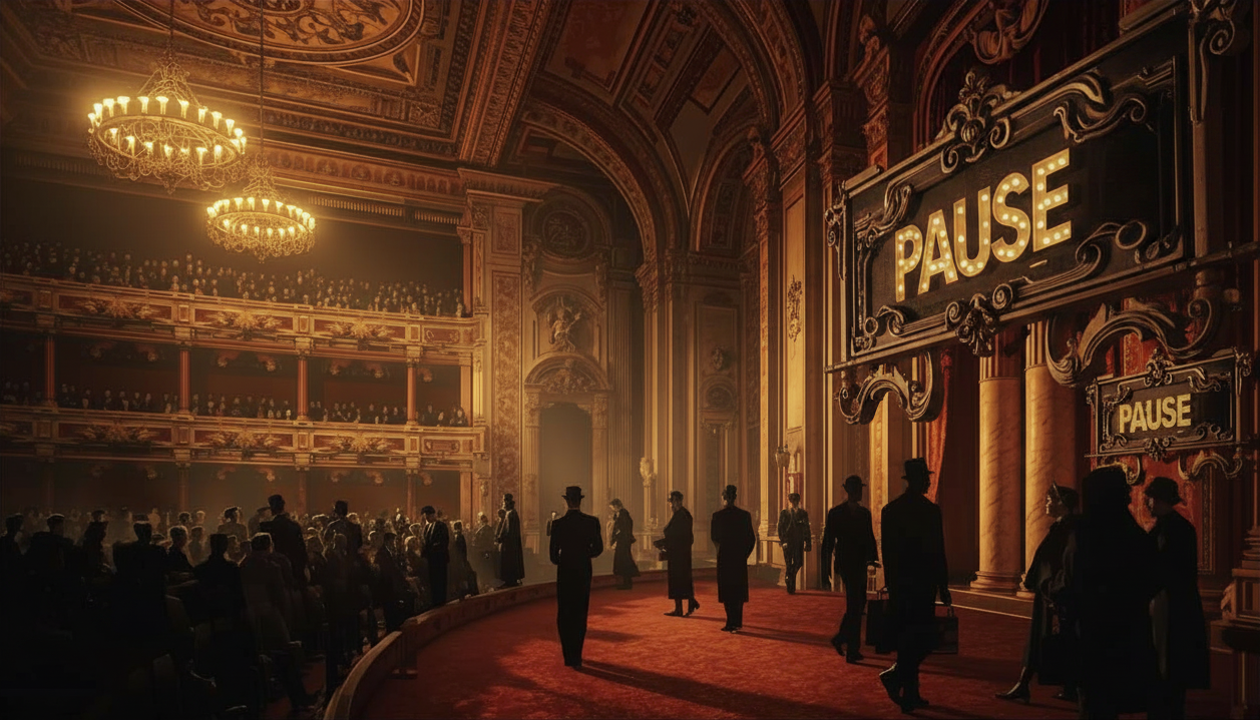
The Space Between Stimulus and Response
There’s a line often attributed to Viktor Frankl that captures the heart of this: between stimulus and response, there is a space, and in that space lies our power to choose.
That space is where intentional leadership lives.
When something provokes you, a sharp comment in a meeting, a missed deadline, a decision you disagree with, the suppressor swallows it down and pretends it didn’t happen. The reactive leader explodes. But the emotionally intelligent leader does something different: they pause. They notice what they’re feeling. And then they choose how to respond.
That pause is not weakness. It’s the most powerful tool a leader has.
What Intentional Vulnerability Actually Looks Like
Vulnerability in leadership isn’t about oversharing or breaking down in front of your team. It’s about alignment, making sure what you show on the outside matches what’s happening on the inside.
It can be as simple as saying:
“I’m not at my best today. Someone else should lead this meeting.”
Or:
“I don’t have the answer to that yet. Give me until tomorrow.”
Or:
“That feedback stung, and I want to sit with it before I respond.”
These statements don’t diminish authority. They amplify it. Because they signal something rare: a leader who is honest enough with themselves to be honest with the room. And when people see that modeled at the top, they start to feel safe enough to do the same. Hidden problems surface earlier. Disagreements get aired before they fester. The whole team gets faster and more honest.
When people feel safe, they dare to be great.
How to Practice the Pause
Becoming the kind of leader who responds with intention rather than reaction is a skill, and like any skill, it’s built through repetition. A few practices that work:
Build reset rituals. After an emotionally charged conversation, don’t barrel into the next one. Take three deep breaths. Walk around the block. Step outside for two minutes. Whatever clears the residue so it doesn’t bleed into the next interaction.
Check in before you walk in. Before you enter a room, ask yourself: What emotional state am I in right now? How is this going to land on the people I’m about to meet? You can’t manage what you haven’t named.
Let your team see the human. You don’t have to perform certainty you don’t feel. Saying “I’m wrestling with this one” is leadership. So is saying “I was wrong about that, here’s what I see now.”
Reward honesty when it costs people something. When someone disagrees with you in a meeting, thank them out loud. When someone brings you bad news early, praise them. The signals you send in those small moments determine whether your team will be honest with you when it actually matters.
The Real Definition of Strength
The leader who erupts in frustration looks powerful for about thirty seconds. The leader who calmly acknowledges the tension and refocuses the conversation earns respect that compounds for years.
That’s the trade. Suppression buys you a short-term illusion of toughness. Intentional vulnerability buys you long-term trust, sharper decisions, and a team that tells you the truth.
Strong leaders aren’t the ones who feel nothing. They’re the ones who feel everything, pause inside that space between stimulus and response, and choose what to do next on purpose.
That’s not softness. That’s mastery.
Related reading
- Leadership burnout: the real causes and what actually fixes them
- Delegation training for leaders
- The power of saying no
Frequently asked questions
What is intentional vulnerability in leadership?
Choosing to be open about uncertainty or mistakes in a way that builds trust, rather than oversharing or performing weakness.
Is vulnerability a leadership strength?
Yes, when it is intentional. It earns trust, invites honesty, and models that it is safe to be human and accountable.
How is intentional vulnerability different from oversharing?
Intentional vulnerability serves the team and the moment. Oversharing serves the leader. The first builds trust, the second burdens people.
What is the suppression trap in leadership?
The suppression trap is the belief that strong leaders hide what they feel. The post says bottling emotion does not remove it; it leaks out as reactivity and distance. Intentional vulnerability is the alternative: choosing what to reveal on purpose, which builds trust without tipping into either suppression or unfiltered oversharing.
How do you practice the pause between stimulus and response?
The post points to the space between what happens and how you react as where leadership lives. Practicing the pause means noticing the trigger, naming what you feel, and choosing a response instead of firing off the reflex. That small gap is what turns raw emotion into intentional, trust-building vulnerability rather than a blurted reaction.
What does intentional vulnerability actually look like day to day?
It looks like naming a real concern without dramatizing it, admitting what you do not know, and owning a mistake while still holding direction. The post frames it as calibrated, not confessional: you share what helps the team trust and follow you, and hold back what would only offload your anxiety onto them.
To go deeper, read what leadership actually is: a CEO definition that scales, and the 90-day CEO leadership development blueprint.