
Leaders ADAPT on leadership ikigai: Many successful leaders feel strangely empty, because achievement without purpose does not satisfy. This piece uses the Japanese concept of ikigai, and four questions that locate it, to reconnect your work with meaning, and shows how moving from success to significance turns hard-won accomplishment into something that actually fulfills you.
By Andreas Pettersson, founder of Leaders ADAPT and a former Canon executive who has built and scaled multiple companies.
Staring at the ceiling of my corner office, I found myself asking a question that haunts many successful leaders: “Is this all there is?” Despite leading a successful startup company for more than five years, something felt hollow. According to a 2023 Deloitte survey, 65% of C-suite executives admit to feeling this same disconnect between their success and their sense of purpose.
As CEOs and leaders, we are driven by our ambition and our desire to create a lasting impact. How often do we pause though to ask ourselves, “Why am I actually doing this?” Beyond the surface, there is almost always deeper philosophical and psychological reasoning behind who we are and why we do what we do.
The Ancient Wisdom of Ikigai
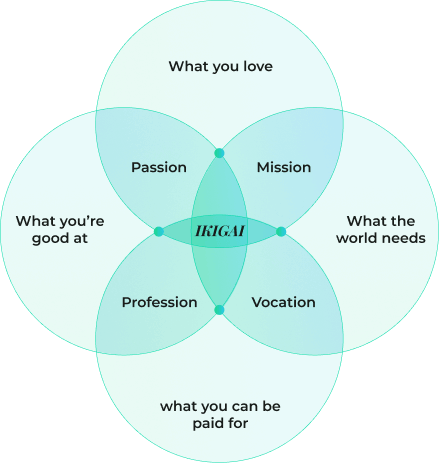
In Japan, there is a concept known as ikigai that translates to “reason for being” made of two Japanese words: iki (meaning “alive”) and gai (meaning “worth” or “reason”). Ikigai is essentially a philosophical framework that can help you pinpoint your larger purpose by getting clear on the intersection between these four areas in your life: what you love (your passion), what you are good at (your vocation), what the world needs (your mission), and what you can get paid for (your profession).
Finding your personal ikigai
I personally promote the Japenese ikigai philosophy because it helped me get clear on my purpose: to empower others by helping them adapt, shift their mindset, and unlock their true self-worth. Staying focused on that purpose then allowed me to stay focused on doing the necessary actions to live it: starting my business helping high-level CEOs through executive coaching and leadership transformation.
Four Essential Questions for Self-Discovery
Spend some time pondering over and journaling about these ikigai-based questions:
- Your passion – Reflect on what brings you joy. As a CEO, what part of your role excites you the most? Is it leading others, driving innovation, expanding out of comfort zones, or something else?
- Your vocation – What are your strengths? Maybe these are the qualities that propelled you to your current position? (Ex: resilience, strategic vision, organization, delegation, the ability to inspire, etc.)
- Your mission – Zoom out beyond yourself, beyond your company. Who is the person you want to help in the world? Why do you want to help them? How do you want your organization to impact your community? What value does your business add to people’s lives? How are you giving back?
- Your profession – Can you make a living from your passion, vocation, and mission? For a CEO, success often means sustainability, growth, and creating long-term value. Can you find that in this space?
The ripple effect of living your purpose
Discovering your ikigai means going beyond the surface level of desired metrics, revenue, and market share. It also is about more than personal exploration. Ikigai allows you to tap into a deeper sense of purpose that fuels your work, creates positive impact, and helps you lead others with integrity and intention. From this mental space, it would be hard to not find success since you will be operating from a place of true authenticity. And best of all: when you live your ikigai, you inspire others around you to do the same.
Conclusion
Embracing Japanese ikigai helps CEOs and leaders overcome the hollow feeling that can accompany success. By examining the four pillars, passion, vocation, mission, and profession, you’ll forge a path that resonates with your core values and aspirations. Aligning your role and business with your genuine “reason for being” ensures that each step you take leads to fulfilling growth, both for you and the people you serve.
Ready to discover your Japanese ikigai and lead with deeper purpose? Book a Free Consultation and explore how personalized coaching can help you integrate passion, mission, vocation, and profession into a truly meaningful leadership journey.
What ikigai really asks of a leader
Ikigai, the reason for being, sits at the intersection of what you love, what you are good at, what the world needs, and what sustains you. For leaders, the hollow feeling at the top usually means one of those four has gone missing, most often meaning. Naming which one is the first step back to engaged leadership.
From success to significance
The Deloitte finding that most executives feel a gap between success and purpose is not a personal failing, it is what happens when the scoreboard becomes the only point. The way back is to reconnect the work to impact and values, which is the heart of purpose-driven leadership and of values-based leadership.
Protecting your reason for being under pressure
Purpose erodes quietest when you are stretched thinnest. Building recovery, clarity, and honest reflection into how you operate is how you keep it. That steadiness under pressure is the resilient CEO mindset.
Frequently asked questions
What is ikigai in leadership?
Ikigai is your reason for being, the intersection of what you love, what you are good at, what the world needs, and what sustains you. In leadership it is the source of durable motivation.
Why do successful leaders feel unfulfilled?
Usually because the scoreboard has become the only point and the work has lost its connection to meaning, impact, or values.
How do leaders find purpose again?
Reconnect the work to impact and values, name which part of your ikigai has gone missing, and protect reflection time so purpose does not erode under pressure.
What four questions help you find your ikigai?
The post frames ikigai around four questions: what you love, what you are good at, what the world needs, and what you can be valued for. Where the answers overlap is your ikigai. For leaders, the exercise cuts through busyness to reconnect daily work with a reason for doing it that outlasts the next target.
Why do successful leaders often feel unfulfilled?
The post says hitting external markers, revenue, titles, status, does not satisfy a deeper need for meaning. Success without purpose feels hollow, which is why accomplished leaders can feel empty at the top. Ikigai addresses this by reconnecting achievement to significance, so what you build actually feeds you rather than just proving something.
What does moving from success to significance mean for a leader?
The post’s shift is from accumulating wins to making them matter: using your position, resources, and influence to serve something beyond yourself. Significance is measured by impact on others, not personal score. For a leader, ikigai points the way, aligning the work with purpose so success finally becomes fulfilling.