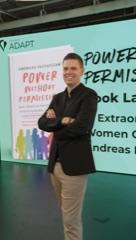

By Andreas Pettersson, Founder, Leaders ADAPT
The deal closed on a Friday. On Monday the operating partner calls the CEO and asks three questions. When do I get a monthly pack I can trust? Who owns the pricing workstream? What is your read on the team? The CEO, who founded the company, has a controller, a sales lead who is also the best salesperson, and a calendar with no room in it. The 100 day board meeting is already on the calendar.
That is the moment most private equity sponsors reach for a fractional executive.
A fractional executive in a private equity portfolio company is a senior CFO, COO, revenue or technology leader who holds a real seat one to three days a week during the 100 day plan and the months after it, reports to the portfolio company CEO, and builds what the operating partner needs to see. Not a consultant with a slide deck. Not the sponsor's eyes inside the building.
I have run companies under owners with a plan and a date. I built Arcules from zero to over 150 people, sold it to Canon, then ran a Canon company as its youngest standalone CEO. Every quarter I sat in front of a board that asked what I had promised, what had moved and why they should believe the next number. The people who made those meetings bearable were the senior leaders who built the numbers with me, not for me.
Quick answer: Private equity sponsors place fractional executives in portfolio companies to fill a CFO, COO, revenue or technology seat during the 100 day plan without waiting months for a full time search. The seat works one to three days a week, reports to the CEO, builds the reporting and operating cadence the operating partner expects, gives an honest read on the team, and either hands over to a permanent hire or steps down to advisory.
Leaders ADAPT places fractional executives from its own bench and stays accountable for the engagement, priced as a fixed fee quoted after the first call. Every survey figure on this page belongs to its publisher and is linked with the date I read it. If their number has changed, their page wins. No firm named here pays us.
Why sponsors reach for a fractional seat in the first 100 days
The arithmetic of a private equity hold has changed, and the leadership seats feel it first.
Bain's 2026 global report says holding periods at exit for buyout funds now hover at around seven years, with 32,000 unsold companies worth $3.8 trillion still in portfolios. It also says a typical deal now needs roughly twice the annual EBITDA growth it needed in the 2010s to reach the same return, because multiples no longer expand on their own, per Bain and Company (February 2026, read October 2026). Growth now has to come from operating work. Operating work needs people in the seats.
The seats are usually where the gaps are. A Stanton Chase practice group survey found that close to seven in ten respondents named CFO or finance leadership as the gap they see most often in the first 100 days, and that fewer than one in three clients run a formal leadership assessment in that window, per Stanton Chase (August 2026, read October 2026).
And the cost of getting the people wrong is visible. In the AlixPartners 2026 survey of 427 private equity leaders and portfolio company executives, nearly two thirds of PE firms reported CEO turnover during the holding period, per AlixPartners (March 2026, read October 2026).
Put those three together and you get the case for a fractional seat. The plan needs a senior finance or operating leader in week one. A permanent search takes a quarter or more, and a rushed permanent hire is the most expensive mistake on the board. A fractional executive fills the gap with senior judgment now and buys the sponsor time to hire the right person later. The value creation plan itself, its workstreams and its board rhythm, is covered on our value creation plan page. This page is about the person sitting in one of its empty chairs.
The 100 day plan seat, checkpoint by checkpoint
A fractional executive in a portfolio company does not get a gentle start. The first 100 days have four checkpoints, and the operating partner is watching each one.
Close to day 10: one page of facts. Before any plan, the seat writes down what is true today. Which numbers exist, how late they arrive, who produces them, and which ones nobody believes. In a finance seat that means the close calendar, the cash position and the gap between reported and adjusted EBITDA. In an operating seat it means throughput, on time delivery and the three handoffs that break every week. The page goes to the CEO first.
Day 30: the baseline the board will use. The numbers the plan will be judged on, reported weekly, even if the first weeks look bad. Bad and honest beats good and late. Sponsors forgive a weak baseline. They do not forgive a baseline that moves after the fact.
Day 60: the seat decision. By now the fractional executive has sat in enough meetings to say what the seat needs long term. Is this a full time CFO, or a strong controller plus advisory? Does the company need a COO, or does the CEO need to stop running operations from the sales floor? McKinsey's work on CEOs in private equity puts it bluntly on talent: do it fast, and early in your tenure, per McKinsey (March 2023, read October 2026). A seat decision made in month two is cheap. The same decision made in month nine costs a year of the hold.
Day 100: one result the board can see. Not a list of activity. One change in the numbers that the seat owns. A monthly pack that closes in ten business days. A price change live in one segment. A pipeline review that the sales lead runs without the CEO. Then a written plan for the next two quarters and the date the seat expects to hand over.
If you read those four checkpoints and think the CEO should be doing all of it, you are right in principle. In practice the founder CEO in week one is running the company, learning a board, and answering lender calls. The fractional seat is how the plan keeps its dates while the CEO learns the new job.
What the operating partner expects from a fractional executive
I have heard operating partners describe what they want from a portfolio company leader in many words. It comes down to six expectations, and a fractional executive is held to all of them, often more strictly than a permanent hire.
- Numbers that tie to the plan, every week. Not a new dashboard. The same handful of numbers the value creation plan names, on the same day, in the same format. The weekly scorecard is the habit, and the board pack grows out of it.
- No surprises. If a number is going to miss, the operating partner hears it from the CEO before the board meeting, not in it. The fractional executive's job is to see the miss early enough that the CEO can say it first.
- One owner per workstream. Every line the seat touches has a single name next to it. Shared ownership is how a pricing project drifts for two quarters.
- An honest read on the team. Who can deliver their workstream, who needs help, and who is in the wrong seat. Delivered to the CEO, then shared with the sponsor in a form the CEO agrees with.
- A stronger CEO. This is the expectation nobody writes down. A fractional executive who makes the numbers better and the CEO look weaker has failed the sponsor, because the sponsor bought the company with that CEO in it.
- A written exit. When the seat converts to a permanent hire, steps down to advisory, or ends. Sponsors distrust any advisor who quietly becomes permanent.
The fifth point is where good operators separate from expensive ones. The fractional executive contract checklist covers what goes in the engagement letter. The working rule is simpler. The seat builds the machine, and the CEO runs it in front of the board.
Two bosses, one reporting line
Here is the trap I see most often in a sponsor backed company. The operating partner introduces the fractional executive. The CEO accepts the introduction because saying no to the new owner in week two feels unwise. Within a month the leadership team believes the new person reports to the sponsor, and they stop telling that person the truth.
A fractional seat that answers to the sponsor around the CEO becomes a monitor. Monitors get polite answers and clean slides. They do not get the real reason the margin moved.
The fix is a few sentences on one page, signed before day one:
- The fractional executive reports to the portfolio company CEO.
- There is one standing monthly session with the operating partner, and the CEO attends.
- Anything the seat tells the board, the CEO has heard first.
- The team assessment goes to the CEO in full, and to the sponsor in a version the CEO has read.
- If the seat and the CEO disagree on something material, they take it to the operating partner together.
The CEO may not love every line. The sponsor may want a private channel. Hold the line anyway, because the moment the leadership team sees two bosses the seat loses its usefulness. Our page on how fractional engagements work walks through scope, cadence and the review rhythm in more detail.
Which seat to fill first
Most portfolio companies need more than one seat strengthened. They can only absorb one new senior person at a time. The order matters.
Finance first, usually. The sponsor's first demand is a monthly pack it can trust and a cash view it can act on. Many founder led companies close the deal with a capable controller and no CFO. A fractional CFO builds the close calendar, the EBITDA bridge from reported to adjusted, the 13 week cash view and the lender reporting. If a sell side quality of earnings report was done before the deal, the seat starts from its findings rather than from scratch.
Operations when the plan depends on throughput or an add on. If the value creation plan leans on margin through operating work, or on folding in an acquisition, a fractional COO installs the weekly operating rhythm and the handoffs that let the CEO step off the floor.
Revenue when the founder is still the sales team. Many deal theses assume growth from a sales engine that does not yet exist without the founder. A fractional CRO builds pipeline discipline, a forecast the board can rely on, and a sales leader who does not need the CEO in every deal.
Technology and data when the numbers live in spreadsheets. If the plan's metrics cannot be produced without three people and a weekend, a fractional CTO builds one source of truth before the second board meeting.
My rule: fill the seat that decides the 100 day result first. Everything else waits a quarter. Our fractional vs interim vs advisory comparison helps if the question is how much of the week the seat needs, not which seat.
Where AI fits in a portfolio company seat
Three places it helps a fractional executive in a sponsor backed company, and one place it should stay out.
It helps with the board pack. Variance commentary, first drafts of the monthly narrative and reconciliation of odd transactions can be done in hours instead of days. That frees the seat's limited days for the conversations that actually move the numbers.
It helps with the knowledge that lives in the founder's head. Customer history, pricing exceptions and why the plant runs the way it does can be captured into a company knowledge system the whole team can query. That reduces key person risk during the hold, and a buyer at exit will look for exactly that.
It helps with the operating cadence. Meeting notes, action lists and scorecard follow ups drafted by AI keep the weekly rhythm running on the days the fractional executive is not in the building. If the company runs on EOS, our AI for EOS companies guide shows where the tools land in the weekly and quarterly rhythm.
It should stay out of the people calls. Who stays, who moves, who tells the founder the sales lead is not ready to run sales. Those decisions shape careers and the plan at once. Our page on what not to delegate to AI makes the longer argument. AI can prepare the facts for the decision. A person has to own it.
What a fractional executive does not fix in a PE portfolio company
I say this on the first call, because sponsors and CEOs sometimes hope a senior part time hire will cover for a bigger problem.
It does not fix a CEO who cannot run the plan. If the CEO is the bottleneck on every decision, the fractional executive will build reporting that shows the bottleneck clearly and then wait for the CEO like everyone else. That work belongs to the CEO, and it is the work I do with CEOs directly.
It does not fix a thesis that was wrong at close. If the growth the deal assumed is not in the market, no operating seat will find it. The honest read is to say so by day 60, with evidence, so the plan can be reset before the first board review rather than after the third.
It does not fix a board that changes priorities every quarter. A seat built to deliver six workstreams cannot deliver a new six every 90 days.
It does not replace a permanent leadership team. The seat buys time and builds the machine. The company still needs a team that can run the plan when the fractional executive leaves, which is why I pair these seats with leadership team development. A buyer at exit will look at that team, not at the people who passed through, and our page on what buyers look for in a management team explains what they test.
Who is on the bench for this
Steve Shaw is the fractional CFO on the Leaders ADAPT bench. Steve has twenty years in finance leadership and works with owners on clean books, cash discipline, financial positioning before a sale and the numbers conversation with buyers and lenders. In a portfolio company he is the one building the monthly pack the operating partner asked for on day one. Steve also takes COO seats where the operating problem is finance led, such as cash, margin and pricing.
Steve Prodger is the fractional Chief Revenue Officer on the bench. Steve builds revenue engines, pipeline discipline and sales leadership for owner led companies. When the deal thesis assumes growth the founder is still producing personally, Steve is who I bring in.
Chris Geddes and Marina St. Cyr are fractional COOs on the bench. Chris pairs operations leadership with AI transformation work. Marina is strong on detail and runs the cadence and the follow through that a 100 day plan lives or dies on.
Sergey Dmitriev is the fractional CTO and AI systems partner. When the plan's numbers live in spreadsheets, Sergey builds the data and knowledge systems, and trains the leadership team on the tools with me.
Thor Legvold is the leadership psychologist on the bench. He runs the assessments, executive fit and team dynamics work behind a management team assessment, so the read the sponsor receives is evidence, not opinion.
Every engagement runs through Leaders ADAPT. I take the first call, match the partner and stay in the room with the CEO. The fractional executive services hub explains the three shapes, and Fractional Executives and Advisory shows how the seats are set up.
Fractional executives in private equity FAQ
Why do private equity firms use fractional executives in portfolio companies?
Because the 100 day plan needs a senior seat filled now, and a full time search takes months. A fractional executive brings a CFO, COO or revenue leader into the company one to three days a week, builds the reporting and cadence the sponsor needs, and gives the board an honest read on whether the seat needs a permanent hire and what that person should look like.
What does an operating partner expect from a fractional executive?
Weekly numbers that tie to the plan, no surprises before a board meeting, a clear owner for every workstream the seat touches, an early and honest read on the management team, and a written exit from the seat. Operating partners judge the person on whether the CEO gets stronger. A fractional executive who makes the CEO look weak to the sponsor has failed, even if the numbers improved.
Who does a fractional executive report to in a PE backed company?
To the portfolio company CEO, in writing, with a standing line to the operating partner that the CEO knows about and attends when it matters. A seat that reports to the sponsor around the CEO turns into a monitor, and the leadership team stops telling it the truth. One boss, an agreed monthly review with the sponsor, and nothing said to the board that the CEO has not heard first.
Which fractional seat do PE portfolio companies fill most often?
The finance seat. In a 2026 Stanton Chase practice group survey, close to seven in ten respondents named CFO or finance leadership as the gap they see most often in the first 100 days. The sponsor needs monthly reporting it can trust, a cash view and a clean EBITDA bridge, and many founder led companies arrive at close with a controller rather than a CFO.
How long does a fractional executive stay in a portfolio company?
Most seats in a portfolio company run six to eighteen months. The first 100 days build the reporting and cadence, the next six months prove it runs, and then the seat either converts to a full time hire the fractional executive helps recruit, or steps down to a lighter advisory shape. Write the end condition into the engagement letter before day one.
Is a fractional executive the same as an interim executive in private equity?
No. An interim executive is full time for a fixed period, usually to cover a vacancy or a transaction. A fractional executive works part of the week inside the company and stays involved for longer. Sponsors use interims when the seat must be filled every day, and fractional seats when the company needs senior judgment and a build, not a body in the chair.
Can a fractional executive help with the management team assessment?
Yes, and it is one of the most useful things the seat does. A senior person who sits in the weekly meetings for six weeks sees how decisions are made, who owns what and who waits for the CEO. That read is worth more than an interview. It should go to the CEO first, then to the sponsor, and never as a surprise.
What does a fractional executive not fix in a PE portfolio company?
It does not fix a CEO who cannot run the plan, a thesis that was wrong at close, or a board that changes priorities every quarter. It also does not replace a permanent leadership team. The seat builds the machine and gives an honest read. The CEO, the team and the sponsor still have to make the hard decisions it surfaces.
Write the day 100 sentence before day one
Before you bring anyone into a portfolio company, write one sentence: what will the board see on day 100 that it cannot see today, and which seat owns it. If you cannot write the sentence, the problem is not a missing executive yet. It is a plan that has not chosen.
If you can write it, the sentence is the brief for the fractional executive, the first line of the engagement letter, and the thing the operating partner will ask about at the 100 day meeting.
What the first conversation looks like
It is a 30 minute call with me, not a sales rep. You bring the value creation plan, or whatever version of it exists, and the day 100 sentence. I tell you which seat decides the first board meeting, whether a fractional executive from the bench fits, or whether the real work is the CEO's own decisions. If the answer is a full time search, I say so.
If we go ahead, the partner from the bench joins the second call, we agree the reporting line, the three outcomes and the end condition in writing, and the fee is fixed and quoted after that call. I stay in the room for the length of the engagement.
Your step for tomorrow morning: take the free assessments so I can see how the company depends on the CEO before we talk about the seat. Then book a fit conversation. Filling the seat is the easy part. Choosing which one is what the call is for.