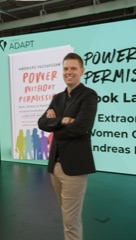
By Andreas Pettersson, Founder, Leaders ADAPT
Most leadership teams do not have a meeting problem. They have a clock problem.
The weekly meeting runs on one clock. The numbers arrive on another. The quarter is set on a third, and the board reads a fourth.
Every clock is correct on its own. Together they produce a leadership team that is always slightly out of time with itself.
This guide is the hub for everything we have written on meeting cadence. It compares the rhythms that the Entrepreneurial Operating System (EOS), Scaling Up, 4DX and OKRs each prescribe, gives you the smallest version that works at 15, 50 and 150 people, and shows where AI belongs in it. I ran EOS for years at Arcules, the company I founded, scaled to 150 people and sold to Canon, and I run it today at Leaders ADAPT with about 10 people.
Quick answer: A meeting cadence is the fixed schedule of recurring meetings a leadership team runs on: often a short daily huddle, a weekly leadership meeting, a monthly numbers review, a quarterly planning session and an annual plan. EOS, Scaling Up, 4DX and OKRs each prescribe a version. For a 15 person company, the minimum is a weekly meeting, a quarterly session and a yearly plan.
What is a meeting cadence, and what is an operating rhythm?
A meeting cadence is the fixed schedule of recurring meetings, each with a set length, agenda and purpose, that a leadership team uses to make decisions on a predictable clock.
An operating rhythm is the meeting cadence plus the numbers, documents and hand-offs that connect one meeting to the next.
People use operating rhythm, operating cadence, business rhythm and management cadence almost interchangeably. The distinction that matters is this: a cadence is a calendar, and a rhythm is a calendar that talks to itself.
The weekly scorecard feeds the monthly review. The monthly review feeds the quarterly business review. The quarterly review feeds the next plan.
I am not a fan of running a company with no framework at all. Once you are more than three people, you need a framework, and you need to work on your leadership as well. At minimum, that means a calendar with a yearly, a quarterly and a monthly meeting rhythm from the start, because every business moves in cycles whether you schedule them or not.
The 5 Minute Leader book, which I wrote, puts the payoff in one line: "Rhythm creates predictability. Predictability creates trust. Trust creates speed."
Leaders ADAPT is an independent advisory firm with no affiliation, certification or endorsement from EOS Worldwide, the owner of EOS, or from Scaling Up, Pinnacle Business Guides, FranklinCovey or any other framework owner. We name their systems in order to compare them, and the tables on this page summarise them in our own words.
How do the EOS, Scaling Up, 4DX and OKR cadences compare?
Each framework sells its own meeting rhythm, and each vendor describes only its own. Here they are side by side, with the 5 Minute Leader Rhythm Protocol as it appears in the book. This is our summary, not any vendor's material.
| Layer | EOS | Scaling Up | 4DX | OKRs | 5 Minute Leader Rhythm Protocol |
|---|---|---|---|---|---|
| Daily | Not prescribed for the leadership team | Short daily huddle | Not prescribed | Not prescribed | Stand-up, 15 minutes, three questions |
| Weekly | Level 10 Meeting, 90 minutes, fixed agenda | Weekly meeting on priorities and metrics | Short WIG session, commitments on lead measures | Weekly check-in on key results, common practice | Team meeting, 60 to 90 minutes |
| Monthly | Not prescribed, many teams add a numbers review | Monthly management meeting | Not a core layer | Optional mid-quarter review | Scorecard session, 30 minutes, four yes or no checks |
| Quarterly | Full day session, Rocks reviewed and set | Quarterly planning session | Not a core layer, goals run longer | OKRs scored and reset | Full day offsite |
| Annual | Two day annual planning | Annual planning session | Wildly important goals set for the period | Annual objectives, often | Not specified |
In my experience, the EOS meeting cadence is the simplest of the four to install, which is part of why it spreads. Scaling Up asks for more layers and more reporting. 4DX adds a short weekly commitment session on top of whatever else you run. OKRs are a goal system first and a cadence second, so OKR teams usually borrow a weekly meeting from somewhere else.
Read down the weekly row. Every system agrees on one thing: the week is the heartbeat. They disagree on the daily layer and on how much monthly structure you need. That is where your company's size, not the framework, should decide.
Where should you start?
Start with the week. When we installed EOS, getting into the weekly meeting rhythm was one of the biggest things we did. The culture work and the written vision came after it.
There is also too much rigidity in EOS in the beginning. You do not need every layer on day one. Install the weekly meeting, run it for a full quarter without missing a week, then add the quarterly session. A cadence installed all at once is a cadence abandoned all at once.
What does each layer decide?
Every layer needs its own question. If two layers answer the same question, one of them is waste.
| Layer | The question it answers | Input | Output |
|---|---|---|---|
| Daily | What is blocked today? | Yesterday's work, today's plan | Blockers named, help assigned |
| Weekly | Are we on track, and what do we solve now? | Scorecard, priority status, issues list | Solved issues, owned to-dos |
| Monthly | Is the plan still working? | Month numbers against plan | Stop, start and fix decisions |
| Quarterly | What happened, and what are the next few things? | Numbers pack, priority results | Lessons, next quarter's priorities |
| Annual | Where are we going this year? | Year in numbers, leaders' pre-work | One year plan, budget, first quarter priorities |
The full framework comparison lives in our guide to business operating systems, with deep dives on Scaling Up and 4DX. If EOS is the one you are weighing, start with my independent EOS review.
What is the minimum viable cadence for a 15 person company?
Weekly. That is the one line answer, and it is the one I give every founder at that size.
Minimum Viable Cadence is the Leaders ADAPT term for the fewest recurring meetings that keep a leadership team aligned at its current headcount, with nothing added until a real decision needs a home.
At 15 people, the weekly leadership meeting carries almost everything: the numbers, the quarter's priorities, the issues.
A quarterly half day sets the next quarter. A yearly day sets the direction. One to one meetings run underneath. That is it.
Establish the habits early even when you are a few people. Thinking in 90 day priorities and keeping a running issues list costs almost nothing at 5 people and saves you a painful installation at 50.
How does the cadence change as the company grows?
| Headcount | Daily | Weekly | Monthly | Quarterly | Annual |
|---|---|---|---|---|---|
| 3 to 10 | None | 60 minute team meeting with numbers | None | Half day | One day |
| About 15 | Optional huddle | 90 minute leadership meeting | 30 minute numbers check | Half day | One day |
| About 50 | Huddles inside teams | Leadership meeting plus team meetings | 60 minute numbers review | Full day | Two days |
| About 150 | Huddles inside teams | Leadership, team and business review meetings | Half day management review | Full day, plus a separate review | Two days, pre-work weeks ahead |
This is our view from running the cadence at 10 and at 150, not a framework's prescription. The pattern: new layers appear below the leadership team first, and the leadership meeting itself should not get longer.
Rotate who runs the leadership meeting as you grow. The Integrator running it is fine. But I have seen what happens when the Integrator cannot be there and nobody else knows how, and a meeting that only one person can run does not cascade down the organization. The managers who run the team meetings at 50 people learned it by running the leadership meeting at 15.
Who owns the cadence?
In an EOS company, the Integrator usually owns the cadence and runs the weekly meeting. That only works if the CEO actually delegates the authority, not just the task. Weekly meetings fail when the Visionary or CEO holds on to it.
I have been in more than one situation, as CEO, where I wanted to take the company in a certain direction and felt it was more important to keep the process and let the Integrator make the call. That is what owning the cadence looks like from the other chair.
Do you need a daily huddle?
Sometimes. A daily huddle earns its place when work changes by the hour: operations, service delivery, a launch, a crisis. The 5 Minute Leader version is 15 minutes, 30 seconds per person, three questions, no problem solving in the huddle, no phones. The book's line on crises is right: crisis is exactly when you need rhythm most.
A leadership team whose priorities move weekly usually does not need one. Adding a daily huddle to a team that does not need it is how a cadence starts eating the week.
How should the cadence line up with the quarter and board reporting?
At Arcules we ran weekly Level 10 Meetings, monthly performance reviews of our numbers, quarterly Rock reviews and quarterly reporting to Canon. A good rhythm, on paper.
In the beginning we did not time these against each other. The quarter would end, board preparation would start, and the leadership team would still be arguing about last quarter while building slides for the next. That friction made people question whether EOS was the right model for us at all.
The fix was sequencing. Close last quarter before board prep begins. Set next quarter's Rocks before any board or parent company report is due.
Then build the slides. By the time the board saw anything, we had already had our session, hashed out the hard parts, and were fully aligned.
We call that sequence Close Before Board. The step by step version, with a template, is in our quarterly business review guide, and the session that sets the next quarter is in our quarterly planning guide.
How many meetings is too many?
The test is not the number. It is whether each meeting produces decisions that no other meeting can.
Here is what happens when a cadence grows without a test. A monthly meeting is added for a problem that went away. A second weekly meeting is added because the first one ran long.
The CEO sits in all of them and switches context every hour. That switching cost is massive, and it leaves the whole organization with whiplash and a quiet fear of the next change.
The 5 Minute Leader names four rhythm killers worth taping to the wall:
- "Let's skip it just this once."
- "Let's make it longer."
- "Important people can skip."
- "Let's be flexible with timing."
Hold the weekly meeting whether everyone is there or not. End on time, even unfinished. Put a price on the rest with our meeting cost calculator.
The other lever is below the leadership team. When the weekly meeting works, the one to one meetings can get shorter and less frequent, because priorities are already aligned in the room. Our one-on-one meetings guide covers that layer.
Where AI fits in the operating cadence
The cadence is where AI preparation lives. Every layer has a pack that someone assembles by hand today.
| Layer | What AI can prepare | What the meeting still decides |
|---|---|---|
| Daily | A digest of yesterday's blockers and today's calendar | Who helps whom today |
| Weekly | Scorecard pull, exception flags, to-do capture from the transcript | Which issues get solved and by whom |
| Monthly | Variance report against plan | What to stop, start or fix |
| Quarterly | The numbers pack, a status line from every Rock owner | Next quarter's priorities |
| Annual | Year in numbers, a summary of every leader's pre-work | Direction, goals, budget |
AI does not solve the leadership problem. It makes everyone more effective and more efficient, which is a different thing. You can also ask it to score your weekly meeting against its own rules and compare that score with the team's, which is the idea behind scoring your meetings with AI.
What stays human in every layer:
- People decisions
- Issue solving judgment
- Accountability consequences
- Strategic commitments
- Performance conversations
- External promises
The reasons behind that list are in what not to delegate to AI. The full map of AI across Vision, People, Data, Issues, Process and Traction is our hub on AI for companies running EOS.
What a meeting cadence does not fix
A cadence tells you when to meet. It does not tell you how to lead in the room.
EOS in particular lacks the how when it comes to leadership. Companies that run it understand the operating side, but not the details of how to delegate, how to make people accountable, how to run 1:1s or how to give feedback. That is why I built the 5 Minute Leader to sit on top of an operating system rather than replace it.
Growing people create growing organizations, and the opposite is also true. A perfect calendar with a leadership team that avoids conflict produces perfectly scheduled avoidance.
If the rhythm is right and nothing moves, the next place to look is the team itself, which is the subject of our leadership team development guide and our page on operational leadership.
The whole cadence guide, layer by layer
Every page in this series, from the shortest meeting to the longest:
- Weekly: the weekly business review, our Level 10 Meeting guide and the weekly scorecard
- Monthly and quarterly: the quarterly business review and quarterly planning
- Annual: annual planning for leadership teams
- Goals across the layers: OKR examples for leadership teams and OKR vs KPI
- Underneath it all: one-on-one meetings
Common questions about meeting cadence
What is a meeting cadence?
A meeting cadence is the fixed schedule of recurring meetings a team uses to run the business, such as a daily check in, a weekly leadership meeting, a monthly numbers review, a quarterly planning session and an annual plan. Each layer has a set length, a set agenda and a set purpose, so decisions happen on a predictable rhythm.
What is an operating rhythm?
An operating rhythm is the full set of recurring meetings, reports and reviews that a company runs on, together with how they connect. It includes the meeting cadence plus the numbers and documents that flow between meetings, such as the weekly scorecard feeding the monthly review and the quarterly review feeding the next plan. The terms operating rhythm and operating cadence are often used interchangeably.
What meeting cadence does EOS use?
The Entrepreneurial Operating System uses a weekly leadership meeting called the Level 10 Meeting, which runs for 90 minutes on a fixed agenda, a full day quarterly session to review and set Rocks, and a two day annual planning session. Many EOS companies add a monthly numbers review and departmental weekly meetings below the leadership team.
What is the minimum meeting cadence for a small company?
For a company of around 15 people, the minimum workable cadence is a weekly leadership meeting of 60 to 90 minutes that reviews numbers, priorities and issues, plus a short quarterly session to set the next quarter's priorities and a yearly planning day. Regular one to one meetings between managers and their reports complete it.
Should a leadership team hold a daily huddle?
A daily huddle helps when work changes by the hour, such as in operations, service delivery or a crisis, and when a team needs to surface blockers quickly. It should be short, often 15 minutes or less, with no problem solving in the huddle itself. Teams whose priorities change weekly rather than daily often do without one.
How many meetings should a leadership team have each week?
Most leadership teams need one leadership meeting a week plus one to one meetings between each leader and their direct reports. Extra standing meetings should earn their place by producing decisions that the weekly meeting cannot. A useful test is whether each meeting ends with named owners and dates, or only with discussion.
Your next question
- Annual planning: the two day agenda and the weeks around it
- The weekly business review for a 20 to 200 person company
- The 5 Minute Leader protocols that make any meeting cadence work
Put your leadership team's meeting cadence on one page, every layer, every clock. Do they line up, or does the board still set your quarter for you? Reply and tell me.
What it is: the 5 Minute Leader, the protocols for the "how" an operating system leaves out: delegation, accountability, 1:1s, feedback and the rhythm that ties them together. Who it is for: leadership teams that already run EOS, Scaling Up or OKRs and want the meetings in that cadence to produce owned decisions. See the 5 Minute Leader